You have been buying joint capsules for three years. How much less does it hurt today?
The pharmacy on the corner. A box of 30 capsules for about 18 euros. Glucosamine and chondroitin, "for joints and cartilage". You are on your second winter with them.
And still, your knees crack in the morning. Your fingers are stiff over the first coffee. When you stand up after half an hour in a chair, something pulls in your lower back. Your shoulders no longer carry the shopping the way they used to.
The doctor said: "It is your age. It is osteoarthritis. Try another joint combination."
Here is an uncomfortable question: if they work, why does it still hurt after three years?
This is not about whether glucosamine is a "bad ingredient". It is about dose, form and biochemistry. What the pharmacy sells for 15 to 20 euros a month has been tested, and for most people over 45 it does not do what the box implies. This article shows you why, in three parts: what is actually happening inside your joints, why a capsule cannot physically fix it, and what an alternative looks like when it delivers raw material in grams instead of milligrams.

What is really happening in your joints after 45
The anatomy in 60 seconds
A joint is three things working together:
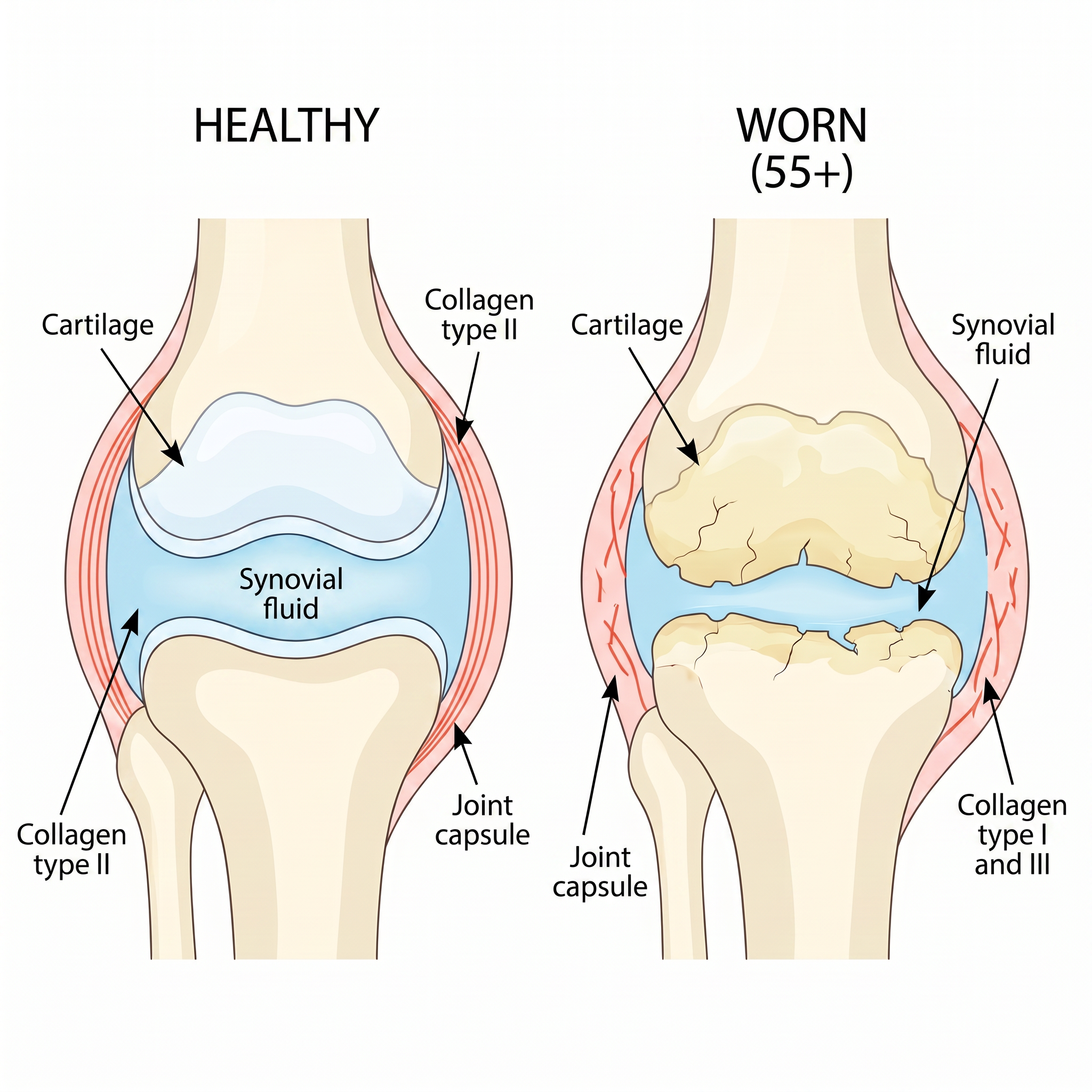
- Cartilage - the smooth cap on the end of both bones that lets them glide without friction. Built by chondrocytes inside a matrix of type II collagen and proteoglycans.
- Synovial fluid - the viscous lubricant in the joint cavity that lowers friction and carries nutrients.
- Joint capsule and ligaments - a dense sheath of type I and type III collagen that holds the joint stable.
When one of those three starts to give way, all three suffer. Cartilage thins, synovial fluid loses viscosity, the capsule weakens, and the joint becomes unstable.
🔬 The part most people, and plenty of clinicians, skip over: 70 to 80% of every structure in a joint is collagen. Cartilage, ligaments, capsule, tendons, all of it.
Why it starts around 45
Here is the factor the pharmacy counter never mentions: oestrogen.
Oestrogen regulates two key enzyme families in joint metabolism. Matrix metalloproteinases (MMPs) break down old collagen. Tissue inhibitors (TIMPs) keep that breakdown in check. When oestrogen falls between roughly 45 and 50, MMPs become hyperactive and start degrading collagen faster than the body can synthesise it.
The clearest measurements come from skin, where women lose roughly 30% of skin collagen in the first five years after menopause. Skin, bone, tendon, ligament and cartilage all draw on the same matrix and the same hormonal signal, which is why the changes rarely stay in one place, even though joint tissue has never been measured with that precision.
It also explains why the pain is often not in one joint but appears in several places at once: knees, finger joints, the lumbar spine, shoulders. That is not coincidence. The entire collagen metabolism sits under the same hormonal control. When oestrogen drops, every collagen tissue reacts at the same time.
There is a second, female specific reason. Oestrogen receptors sit directly in the synovial membrane of the joint. So when oestrogen falls, the synovial fluid changes its chemistry. It becomes less viscous, poorer in hyaluronic acid, less protective. The result is more friction inside the joint under exactly the same load, which accelerates cartilage wear.
> This is not "just getting older". It is a measurable biochemical process in which breakdown outpaces synthesis. And until you supply enough raw material for synthesis, the body cannot reverse it.
What the pharmacy sells and why it fails for most people
None of this is a criticism of pharmacists or GPs. They work with the tools the system hands them. But those tools were built around a model of osteoarthritis that does not account for the hormonal cascade in women after menopause.
Glucosamine sulphate and hydrochloride
One of the best selling "joint supplements" in Europe. In theory, raw material for the glycosaminoglycans in cartilage. In practice: the GAIT trial (Glucosamine/chondroitin Arthritis Intervention Trial, NEJM 2006, PMID: 16495392) followed 1,583 patients with knee osteoarthritis for 24 weeks. The finding: across the group as a whole, glucosamine and chondroitin were not significantly better than placebo. There was one exception worth stating honestly. In the subgroup with moderate to severe pain, the combination did beat placebo (79.2% responders against 54.3%). That subgroup was small and the analysis was exploratory, so it was never accepted as evidence the supplements work in general. If your pain is mild to moderate, which is where most people start, you are in the group the trial found no benefit for.
Chondroitin sulphate
The same story, from the same trial. One component of joint cartilage, delivered in milligrams. It is simply not enough material.
Combination products
These stack glucosamine and chondroitin, sometimes with MSM, turmeric or hyaluronic acid. The idea reads well. The reality is that each active sits at a milligram dose that the clinical literature has already shown is not enough to regenerate cartilage.
> "The doctor says: try this one for three months, and if it does not help we will talk about treatment. Three months later: strange that it did not help, try that one instead." We hear this from customers every week.
Collagen capsules and tablets
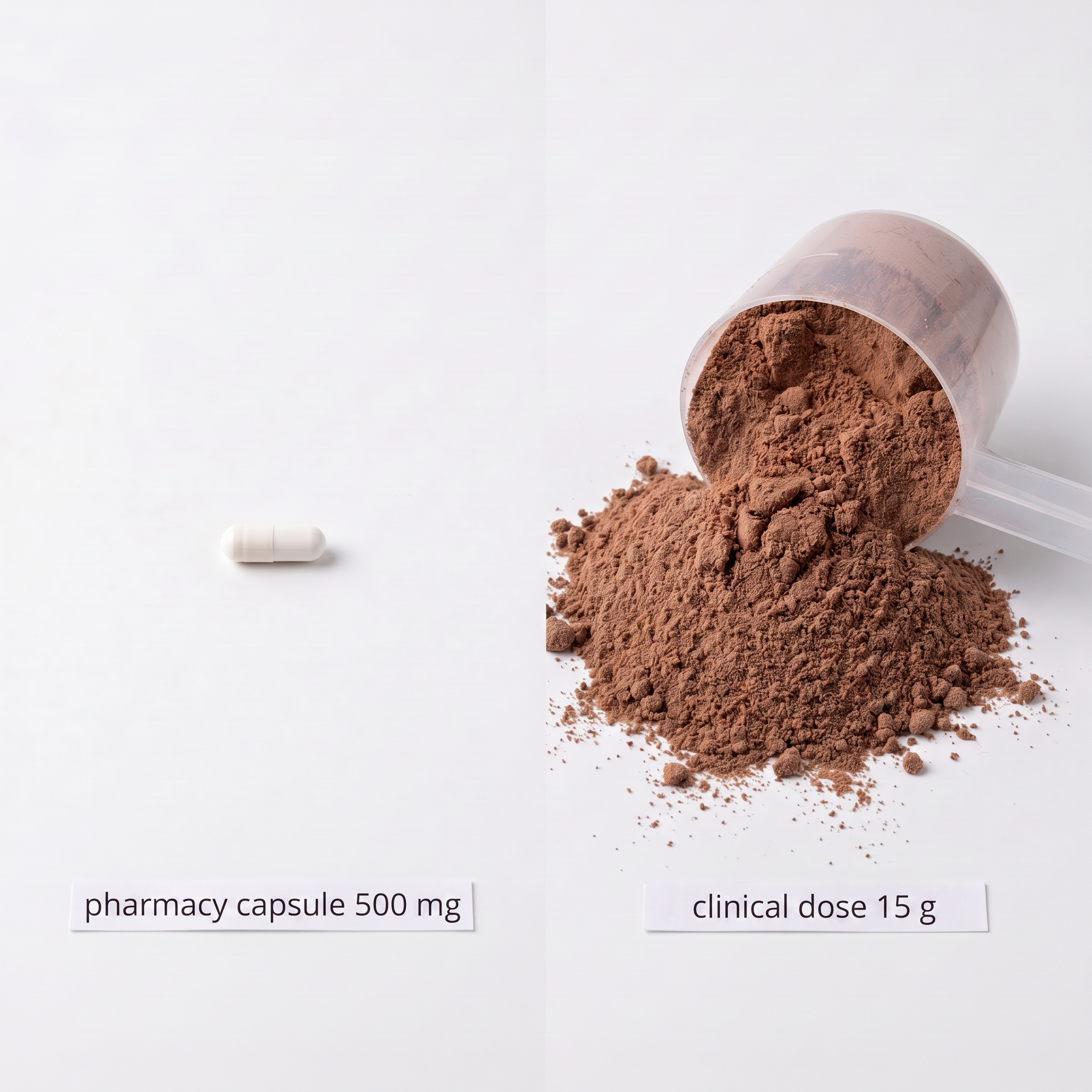
Closer to the right answer, same underlying problem. A typical collagen capsule delivers 1,000 to 2,000 milligrams per dose. The clinical data on regenerating joint structures sits at 10 to 15 grams a day. That is five to fifteen times more than a capsule provides. Most tablets also contain no vitamin C, which is a mandatory cofactor for collagen synthesis itself.
There is a further problem with tablet forms: the molecular weight of the collagen in a tablet is higher than in a hydrolysed powder. A bigger molecule means poorer absorption in the gut. Out of a 1,000 mg tablet, only roughly 100 to 150 mg realistically reaches connective tissue. Tablets create the feeling of doing something without ever delivering a therapeutic dose.
Why taking more capsules does not fix it
People reasonably ask: if milligrams are not enough, why not take ten capsules at once? Technically you can, but it makes no physical or economic sense. Ten 500 mg capsules is 5 grams, still under the clinical dose, and it costs five to ten times more than a single serving of a proper hydrolysate powder. The capsule format was never designed to carry a therapeutic dose. It was designed for maintenance. The problem is that in women over 45, maintenance is not enough, because breakdown has already overtaken synthesis.
A capsule holds milligrams. Joints need grams. The body wants raw material by the gram, not by the milligram. That is why pharmacy supplements 'do not work' for most people over 45.

What the science says about collagen and joints
Hydrolysed collagen, the raw material cells recognise
When you take hydrolysed collagen, meaning collagen enzymatically broken into short peptide chains of 2 to 5 kilodaltons, those peptides cross the gut wall and enter the bloodstream. This has been demonstrated with isotope labelling in several controlled studies.
Once in the blood, specific peptide sequences (Pro-Hyp, Hyp-Gly, Gly-Pro-Hyp) signal the chondrocytes and fibroblasts in joint tissue to increase their own collagen synthesis. It is not that "the collagen goes straight into the cartilage". It is a signalling cascade in which the body receives both the raw material and the instruction to start rebuilding.
Evidence from a trial in postmenopausal women
Koenig D et al., Nutrients 2018 (PMID: 29337906): 102 postmenopausal women took 5 grams of specific collagen peptides daily for 12 months. The result: a significant increase in bone mineral density in the spine and femoral neck, plus a significant rise in the bone formation marker P1NP compared with placebo.
Why does that matter for joints? Bone, cartilage, ligament and capsule share the same collagen matrix. When you supply raw material for bone, you supply it for the rest of the connective tissue too.
Tendon and joint studies
Praet SF et al., Frontiers in Nutrition 2019 (PMID: 31417498): patients with chronic Achilles tendon problems took collagen peptides for 6 months alongside a structured calf loading programme. The placebo group did the same exercise programme without the peptides. The group taking collagen showed a significantly better improvement in tendon structure on imaging and less pain. Worth reading carefully: the exercise was doing work in both groups. What the peptides changed was how much the tissue rebuilt while it was being loaded. The authors specifically note the improvement was confirmed by biochemical markers of collagen synthesis, not just by symptoms. The body was actively building new connective tissue.
Clark KL et al., Current Medical Research and Opinion 2008 (PMID: 18416885): athletes with activity related joint pain took 10 grams of hydrolysed collagen daily for 24 weeks, with a significant reduction in pain both during activity and at rest against placebo. That matters because it shows the effect holds for active people, not only for those resting. Regeneration can outpace load, if the dose is high enough.
Why 15 grams and not 500 milligrams
Taken orally, only about 10% of the peptides reach the relevant connective tissue in a biologically active form. The rest is broken down in digestion or used as a general protein source.
From 15 grams, about 1.5 grams reaches joints and tendons. From 500 milligrams, about 50 milligrams does.
> This is the difference between a therapeutic dose and a cosmetic one. A serious clinical dose delivers enough raw material to overcome the oestrogen driven deficit. A 500 mg capsule simply cannot.
Vitamin C, the mandatory cofactor
The NIH Office of Dietary Supplements names vitamin C as a required cofactor for the enzymes prolyl hydroxylase and lysyl hydroxylase. Without them, procollagen chains cannot be hydroxylated and cannot fold into a stable triple helix. The result is defective collagen fibres that break down quickly.
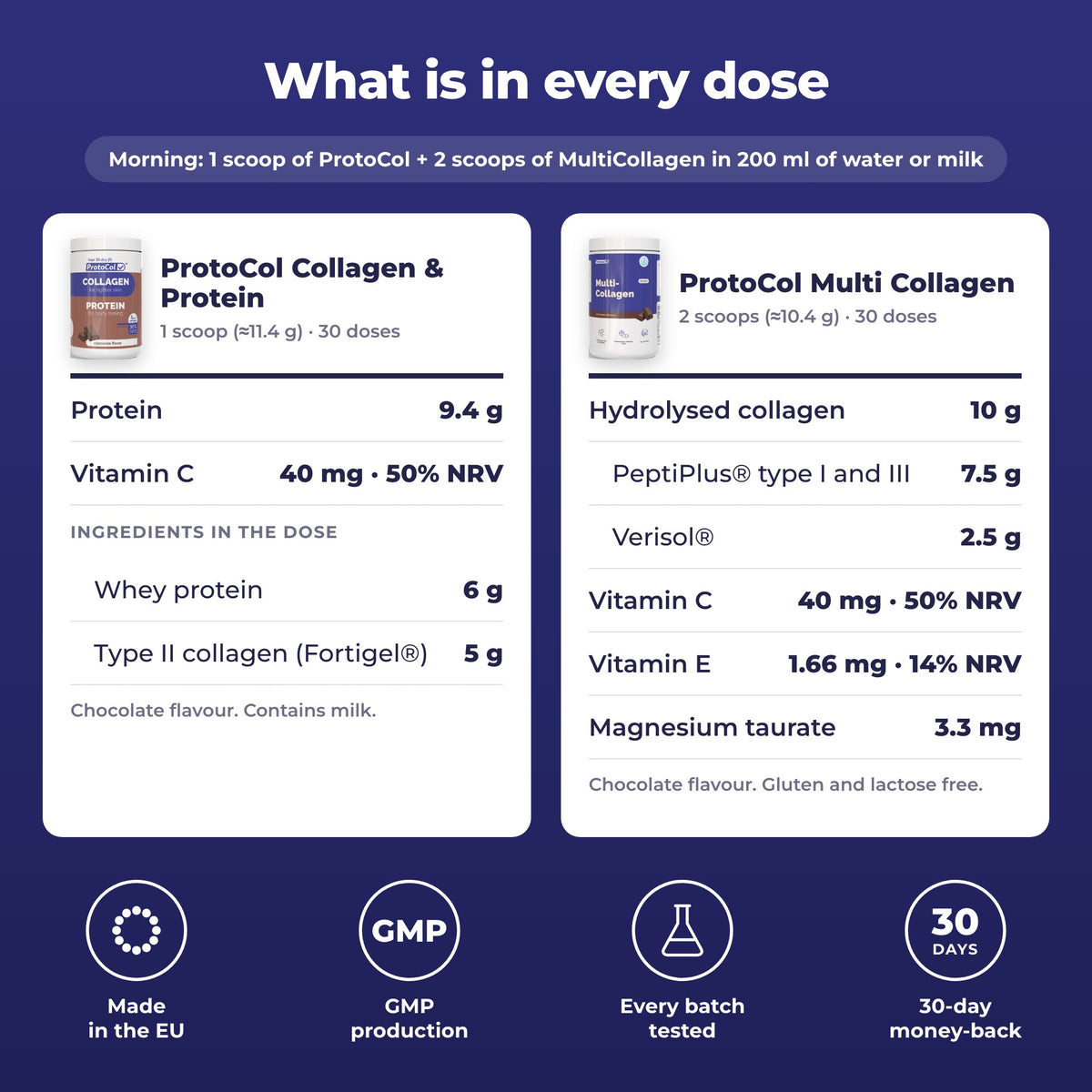
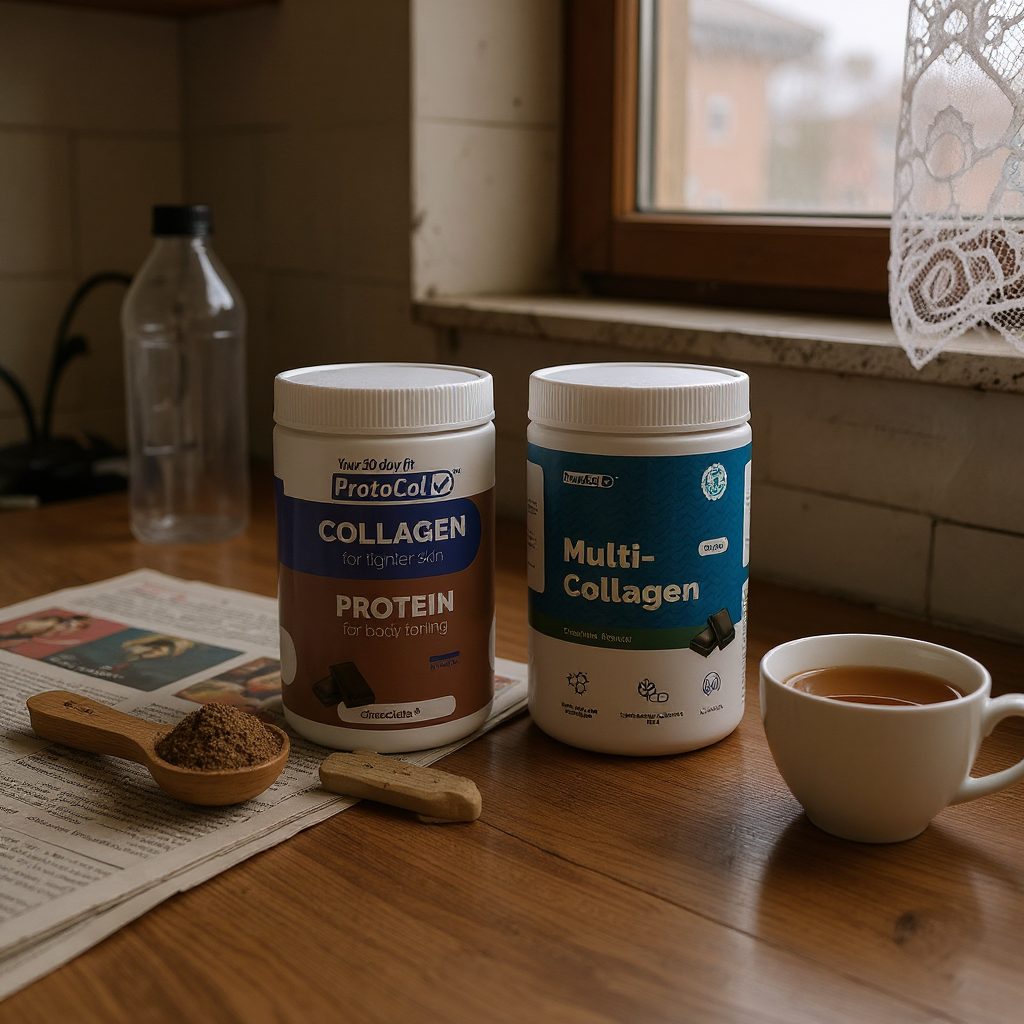
This is why both Protocol jars carry 40 mg of vitamin C per dose (50% NRV). Not "for immunity", but as the biochemically necessary cofactor for collagen formation itself.
Type I and III collagen plus vitamin C, the actual mechanism
Here we reach a question that confuses even pharmacists: type I, type II or type III?
Why not pure type II collagen
Type II is the main collagen in cartilage, so taking exactly that sounds logical. In theory. In practice, the clinical work that shows results on connective tissue is done with type I and III hydrolysate, because it is well tolerated at gram level doses and still stimulates the body's own type II synthesis in cartilage. Pure type II is used at very small doses in a different approach entirely, so the gram level evidence does not transfer to it.
Why type I and III together
- Type I - around 90% of the collagen in bone, skin, tendons and joint capsule. It provides mechanical strength.
- Type III - usually found alongside type I, especially in blood vessels, skin and the connective tissue around joints.
Together they cover the whole connective tissue matrix that menopause compromises.
Why hydrolysed rather than whole collagen
Whole collagen, from bone broth for example, has a molecular weight above 300 kDa. The gut wall does not let molecules that size through. A 2 to 5 kDa hydrolysate passes easily and reaches the bloodstream in active form.
Why protein in the combination
The whey protein in the brown ProtoCol jar delivers leucine, isoleucine and valine, the amino acids that drive muscle synthesis. Stronger muscles around a joint unload it mechanically. Collagen for the tissue plus protein for the muscle is a two factor answer rather than a one factor one.
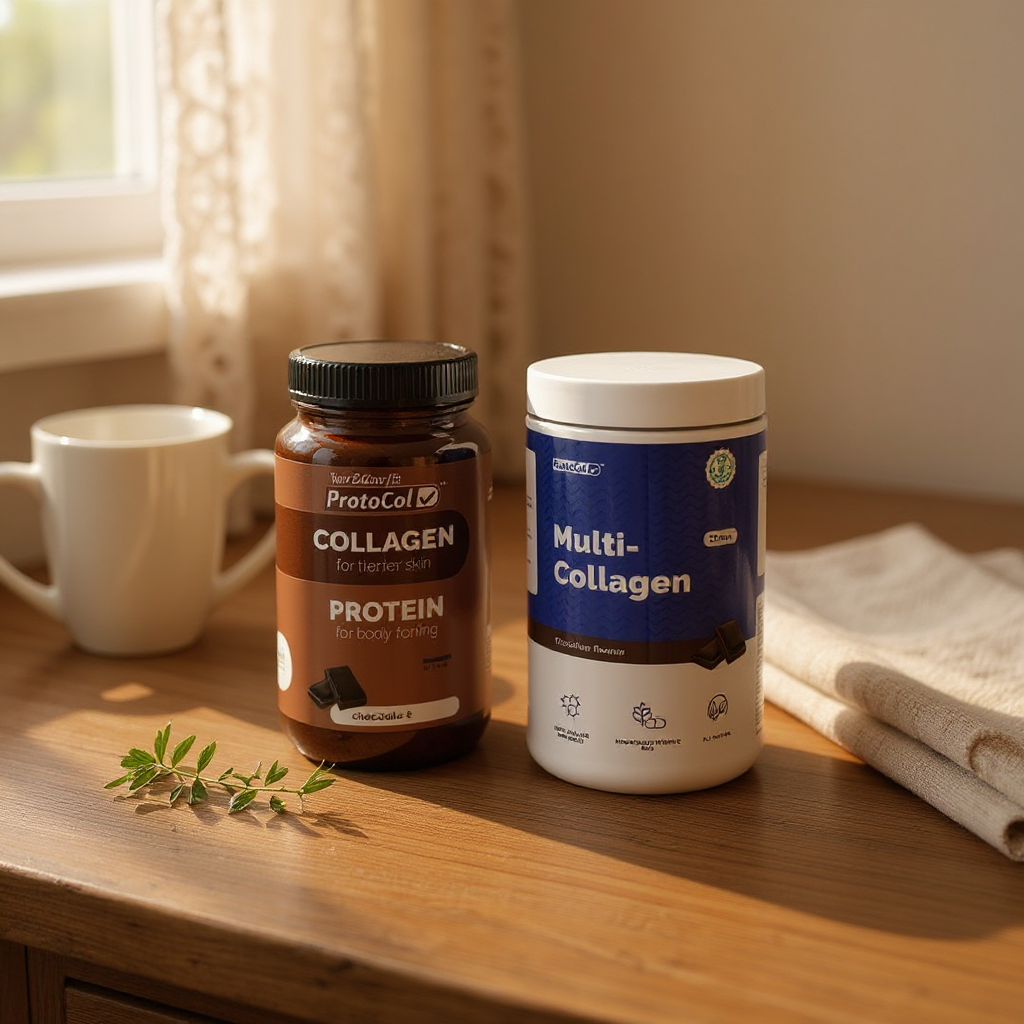
🎯 This is why Protocol works as a bundle of two jars rather than one: the brown jar in the morning (collagen plus protein) and the blue jar in the evening (MultiCollagen).
Why a double dose, brown in the morning and blue at night
There is a real biochemical reason for splitting the dose. Collagen synthesis follows a 24 hour rhythm. The morning serving supplies raw material for active daytime metabolism, when the joints are loaded. The evening serving lines up with the most active phase of tissue repair, which happens during deep sleep.
The blue jar carries 10 g of collagen, 40 mg of vitamin C, 1.66 mg of vitamin E and 3.3 mg of magnesium taurate. An evening dose lines up with the body's own overnight repair window, which is when connective tissue does most of its rebuilding. Raw material, cofactor and recovery window, taken as one system.
What the Protocol Bundle is not
It is not a meal replacement. It is not a mass gaining protein. It is not a joint pill. It is a specialised collagen course at a quantity that matches the clinical literature, with the right cofactors, and without sugar, colourings or artificial sweeteners.
The protocol in practice, 12 weeks with the CollagenMax Bundle
Weeks 1 to 4, filling the store
- Morning on an empty stomach: one dose of ProtoCol Collagen + Protein (the brown jar, about 11.4 g of powder delivering 11 g of protein: 6 g whey plus 5 g hydrolysed type II collagen) in a glass of warm water. Chocolate flavour, dissolves in about 15 seconds.
- Evening, 30 minutes before bed: one dose of MultiCollagen (the blue jar, about 10.4 g of powder delivering 10 g of hydrolysed collagen).
- Expect: better sleep around week 2 to 3. The pain is still there.
- Never mix with coffee or hot tea. Tannins can block absorption by up to 60%.
Weeks 5 to 8, the first signs
- Same dose. Add five minutes of gentle morning mobility work on the affected joints.
- Expect: many people notice less morning stiffness in knees and fingers around here. None of the trials above puts a percentage on week 6, they measure outcomes across the full 12 to 24 week course. Fewer night wakings from discomfort.
- ✅ Side benefits most customers report: less nail breakage, better skin hydration, sometimes less hair shedding.
Weeks 9 to 12, function returns
- Same dose. Add active mobilisation: a 30 minute daily walk, light gymnastics.
- Expect: climbing stairs without holding the handrail, less stiffness after sitting, better sleep.
- What the trials above support at this dose is measurable change in tendon structure and bone formation markers over 12 to 24 weeks. None of them puts a single percentage on how much better you will feel, so neither will we.
- 30 day money back guarantee
- Made in the EU, laboratory tested
- 15 g of hydrolysed collagen a day
What other women say
I took a glucosamine combination for four years. Every winter I bought a new box. My knees still cracked when I stood up. I started the Bundle in November. In week 7, for the first time, I climbed four floors without stopping on the landings.
In the morning I could not open the lid on the honey jar. My fingers were like wood until about 11 o'clock. After nine weeks with both jars, morning and evening, I open jars, I type on my phone, I knit for my granddaughter. I did not believe I would get that back.
I tried three different glucosamine combinations over two years. Barely anything. Here the first four weeks were nothing again and I was ready to give up. Week 6, I suddenly woke up and it simply did not hurt. I spent the whole day waiting for the pain to come back. It did not come back that day.
I did not expect this: my hair stopped falling out so much, my nails got stronger, my skin looks different. And the knees, yes, better too. But the hair was the surprise.
🎯 What we see again and again in our customer base: weeks 1 to 4, nothing noticeable. Weeks 5 to 7, something switches. Weeks 8 to 12, normal life. That is the biological pace of connective tissue regeneration, not a marketing cycle.
Frequently asked questions
Why do glucosamine and chondroitin not work for me?
Because a typical pharmacy capsule contains 500 to 750 milligrams, while joints need 10 to 15 grams of collagen raw material a day. That is a 20 to 30 fold difference. The GAIT trial (NEJM 2006) also showed that across the general population, glucosamine and chondroitin were not significantly better than placebo.
How long before I notice a change in my joints?
The first signs of less morning stiffness appear between week 4 and week 6. A visible reduction in knee and finger pain usually arrives around week 8. A full 12 week course is recommended for lasting results.
What is the difference between Protocol and ordinary pharmacy collagen?
Dose and form. Pharmacy collagen tablets are typically 1,000 to 2,000 mg per dose. The CollagenMax Bundle delivers 15 grams of hydrolysed collagen a day across the two jars, plus 40 mg of vitamin C per dose as the mandatory cofactor. Without vitamin C the collagen chains cannot fold correctly. The hydrolysate also has a 2 to 5 kDa peptide weight, which crosses the gut wall far better.
Can I take it with my medication?
Collagen peptides are a protein food, not a medicine. There are no known interactions with painkillers, antihypertensives or antidiabetic drugs. If you take immunosuppressants or anticoagulants, or you are in active oncology treatment, speak to your treating doctor first.
Is it suitable with rheumatoid arthritis or other autoimmune forms?
The jars contain hydrolysed type I and III collagen, which is the form used in the gram level trials. It is a protein food rather than a medicine. If you have an autoimmune form of arthritis, and especially during an active flare, discuss it with your rheumatologist before starting anything new.
What if I am already taking glucosamine and chondroitin?
There is no reason you cannot take them alongside collagen. But after 8 to 12 weeks on Protocol most people stop the glucosamine, because they no longer see the point. Collagen does in grams what a capsule cannot do in milligrams.
Is it vegan?
No. Collagen is an animal structural protein, produced here from bovine collagen. There is currently no biologically equivalent vegan source of hydrolysed type I and III collagen.
Is there a guarantee if it does not work for me?
Yes, a 30 day money back guarantee. If you feel no difference in the first 30 days, send the jars back, even opened, and we refund the full amount, no questions.
⚠️ When you should see a doctor
Protocol does not replace medical care. It addresses the hormonal and biochemical cascade that routine appointments tend to skip, but real red flags need real investigation.
See an orthopaedist, a rheumatologist or an emergency department if you have:
- Sudden pain with swelling, redness and heat in the joint. The classic triad of acute inflammation or septic arthritis. This needs assessment immediately.
- Joint pain with a fever above 38°C. Possible infection inside the joint.
- Morning stiffness lasting more than 60 minutes every day for six weeks or more. This can indicate rheumatoid arthritis and needs immunological testing.
- Visible displacement or deformity of the joint compared with the other side.
- Pain radiating to the jaw, the left arm or the chest, especially with breathlessness or sweating. This is not joint pain, it is cardiac. Call the emergency number immediately.
- Sudden inability to bear weight or sudden weakness in a limb. This can be a stroke or a neurovascular problem.
With these symptoms collagen will not do harm, but it will not solve the problem in time either. See a specialist.
One practical note: if you are offered a third line glucosamine combination without anyone reviewing your hormonal status or your joint mobility, ask for a referral to a rheumatologist. Chronic joint pain after 45 deserves a specialist assessment, not another box of capsules.
What to do now
Joint pain after 45 is not "just age" and it is not "just osteoarthritis". It is a cascade of three things: falling oestrogen, accelerated collagen breakdown across every joint structure, and not enough raw material to rebuild.
Glucosamine and chondroitin in a capsule cannot physically deliver enough of that raw material. Milligrams against grams is a gap that taking them for longer does not close. That is why you keep going back to the pharmacy every December and it still hurts every January.
A 12 week course with the CollagenMax Bundle delivers 15 grams of hydrolysed collagen a day plus the mandatory vitamin C. That is the dose the clinical literature consistently shows works for connective tissue after menopause. Not magic. Biochemistry, in a quantity that counts.
30 day guarantee: if you feel no difference, we refund you, no questions. We carry the risk, not you.