


C'è una domanda che decide la maggior parte dei casi di dolore lombare cronico nelle donne sopra i 40 anni, e quasi nessuno la pone in un appuntamento di dieci minuti.
La domanda è: dove si ferma il dolore?
Non quanto sia forte. Non da quanto tempo lo hai. Dove si ferma.
Rispondi con precisione e potrai capire, in circa cinque secondi e senza bisogno di un consulto specialistico, se quello che hai è sciatica o qualcosa di molto diverso che le scansioni standard di routine non rilevano.
Il test di 5 secondi: dove si ferma il dolore?
Sdraiati sulla schiena sul letto o sul divano. Trova il punto in cui inizia il dolore. Di solito è la parte bassa della schiena o il gluteo.
Ora traccia con un dito dove si irradia. Inizia da quel punto e scendi lungo la coscia, lungo la parte posteriore o esterna.
Poi chiediti: dove si ferma?

I quattro movimenti che rivelano l'articolazione sacroiliaca
L'articolazione sacroiliaca ha una sua "firma". Il dolore da essa proveniente peggiora con movimenti molto specifici, mentre gli stessi movimenti sono spesso insignificanti in caso di sciatica.
Se hai risposto sì a tre o quattro domande, la probabilità che si tratti di disfunzione sacroiliaca piuttosto che di sciatica è alta.
Ricordalo. Perché ciò che segue spiega perché l'esame standard non la rileva.
Perché il medico dice che è solo l'età
La disfunzione sacroiliaca è una delle condizioni più comunemente diagnosticate erroneamente nelle donne sopra i 50 anni. Non perché i medici siano incompetenti, ma perché l'esame standard non è strutturato per rilevarla.
Perché raggi X e risonanza magnetica non la rilevano
Una radiografia mostra le ossa. Una risonanza magnetica mostra dischi, ossa e radici nervose. Entrambe sono eccellenti nel rilevare ernie, stenosi spinale e fratture.
Ma la disfunzione sacroiliaca è un problema dei tessuti molli, in particolare dei legamenti che mantengono stabile l'articolazione. Su una radiografia l'articolazione appare del tutto normale. Anche su una risonanza magnetica appare normale. E quando le immagini risultano pulite, la conclusione è standard: nessun danno strutturale, probabilmente muscolare.
Una revisione su Pain Medicine (Cohen SP, 2005, PMID: 16266355) lo afferma chiaramente: il 15-30% del dolore lombare cronico ha origine nell'articolazione sacroiliaca. Si tratta di circa un caso su tre o quattro che si presenta in una clinica ortopedica, con un problema che non apparirà nelle immagini standard.
Perché i test provocativi vengono raramente eseguiti
Esistono test specifici che riproducono accuratamente il dolore dell'articolazione sacroiliaca. Il test di Gaenslen. Il test FABER. La compressione pelvica. Un medico che sospetta una disfunzione sacroiliaca applica pressione in punti particolari e chiede: questo riproduce il tuo dolore?
Questi test richiedono dai cinque ai sette minuti. Un appuntamento tipico dura dai cinque ai dieci minuti in totale. I conti non tornano, quindi i test provocativi vengono raramente eseguiti e la diagnosi predefinita rimane lombalgia, sciatica o ormoni.
Perché i trattamenti standard funzionano solo a metà
Quando la diagnosi è imprecisa, anche il trattamento lo è.
- Gli antinfiammatori riducono l'infiammazione e il dolore si attenua per sei-otto ore. Quando l'effetto svanisce, il dolore ritorna, perché la causa non è mai stata affrontata. L'uso a lungo termine sovraccarica lo stomaco, i reni e il sistema cardiovascolare.
- La fisioterapia generica per glutei e core rafforza i muscoli. Muscoli forti aiutano, ma da soli non possono stabilizzare un legamento che si è indebolito. È come riparare una casa con fondamenta cedevoli dipingendo le pareti.
- Le iniezioni di cortisone offrono un sollievo significativo per tre-sei settimane. Iniezioni ripetute a lungo termine possono indebolire ulteriormente il tessuto connettivo, un effetto ben documentato.
Il medico che non conosce la disfunzione sacroiliaca dice che è normale alla tua età. In realtà esiste una causa precisa e una sequenza precisa che la affronta. La causa non è dove la maggior parte delle persone cerca, e la risposta non è sullo scaffale della farmacia.
Cosa sta realmente accadendo nell'articolazione sacroiliaca
Questa parte diventa tecnica, ma è importante. Una volta compreso il meccanismo, capirai perché le capsule della farmacia non sarebbero mai state la soluzione.
L'articolazione sacroiliaca è un ammortizzatore che si muove a malapena
L'articolazione sacroiliaca collega il sacro al bacino. A differenza del ginocchio o della spalla, non è progettata per un'ampia gamma di movimenti. Si muove solo di pochi millimetri. Il suo compito è trasferire il carico dell'intero busto alle gambe e assorbire gli urti durante questo processo.
Ciò che la mantiene stabile non è il muscolo. È una fitta rete di legamenti, e i legamenti sono costruiti prevalentemente da collagene.
Cosa li indebolisce
Due fattori, e si aggravano a vicenda.
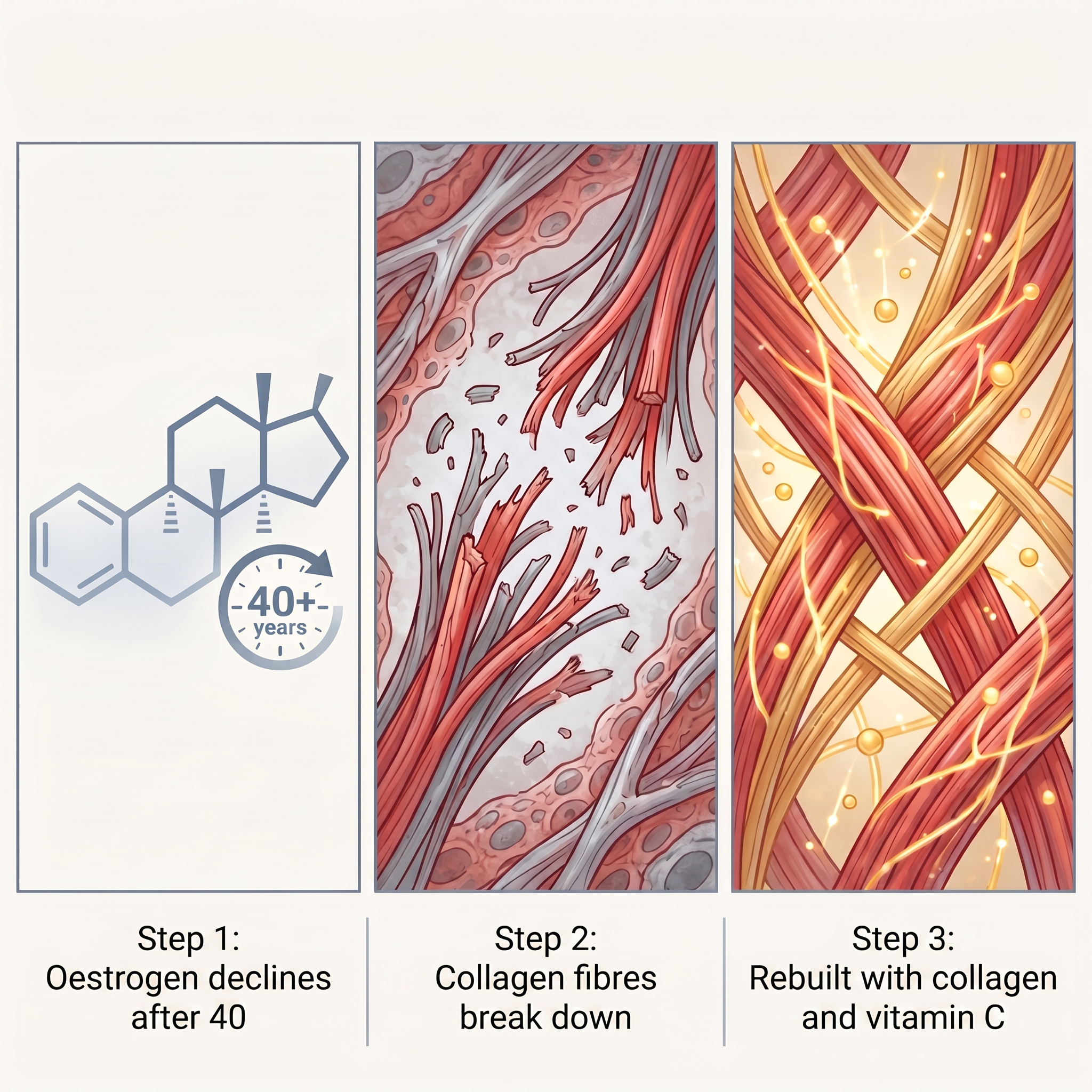
Il primo è il tempo. Intorno ai 40 anni il corpo rallenta la produzione del proprio collagene. I legamenti diventano più rigidi e meno resilienti, e si riparano più lentamente dopo i micro-danni quotidiani.
Il secondo è ormonale. Gli estrogeni influenzano il metabolismo del tessuto connettivo e, durante la perimenopausa e la menopausa, il loro declino non è graduale ma brusco. Questa è una parte importante del motivo per cui il dolore sacroiliaco compare così spesso nelle donne proprio in questo periodo, e perché è così spesso erroneamente attribuito alla sola età.
Quando i legamenti si allentano, l'articolazione si muove leggermente più del dovuto. Questo movimento extra irrita il tessuto circostante, i muscoli circostanti si tendono per compensare, e il risultato è un dolore acuto, unilaterale, peggiore con la rotazione, e ostinatamente resistente a tutto ciò che è mirato al muscolo.
Perché gli antidolorifici non sono mai la soluzione
Un antidolorifico agisce sul segnale. Non fa nulla al legamento. L'allarme si spegne mentre la situazione sottostante rimane invariata, e il costo quotidiano si accumula nello stomaco e nei reni.
Se al legamento manca il materiale di cui è fatto, l'unica cosa che cambia la traiettoria è fornire quel materiale.
Cosa funziona: i tre ingredienti
Collagene idrolizzato, la materia prima
I legamenti sono collagene. Il collagene idrolizzato è pre-scomposto in peptidi corti, il che lo rende molto più assorbibile della normale gelatina, e gli studi dimostrano che questi peptidi raggiungono il tessuto connettivo anziché essere semplicemente bruciati come proteine.
Uno studio di 24 settimane su persone con dolore articolare legato all'attività ha rilevato che i peptidi di collagene hanno migliorato i sintomi rispetto al placebo (PMID: 18416885).
È qui che la maggior parte delle persone sbaglia, ed è una questione di dosaggio.
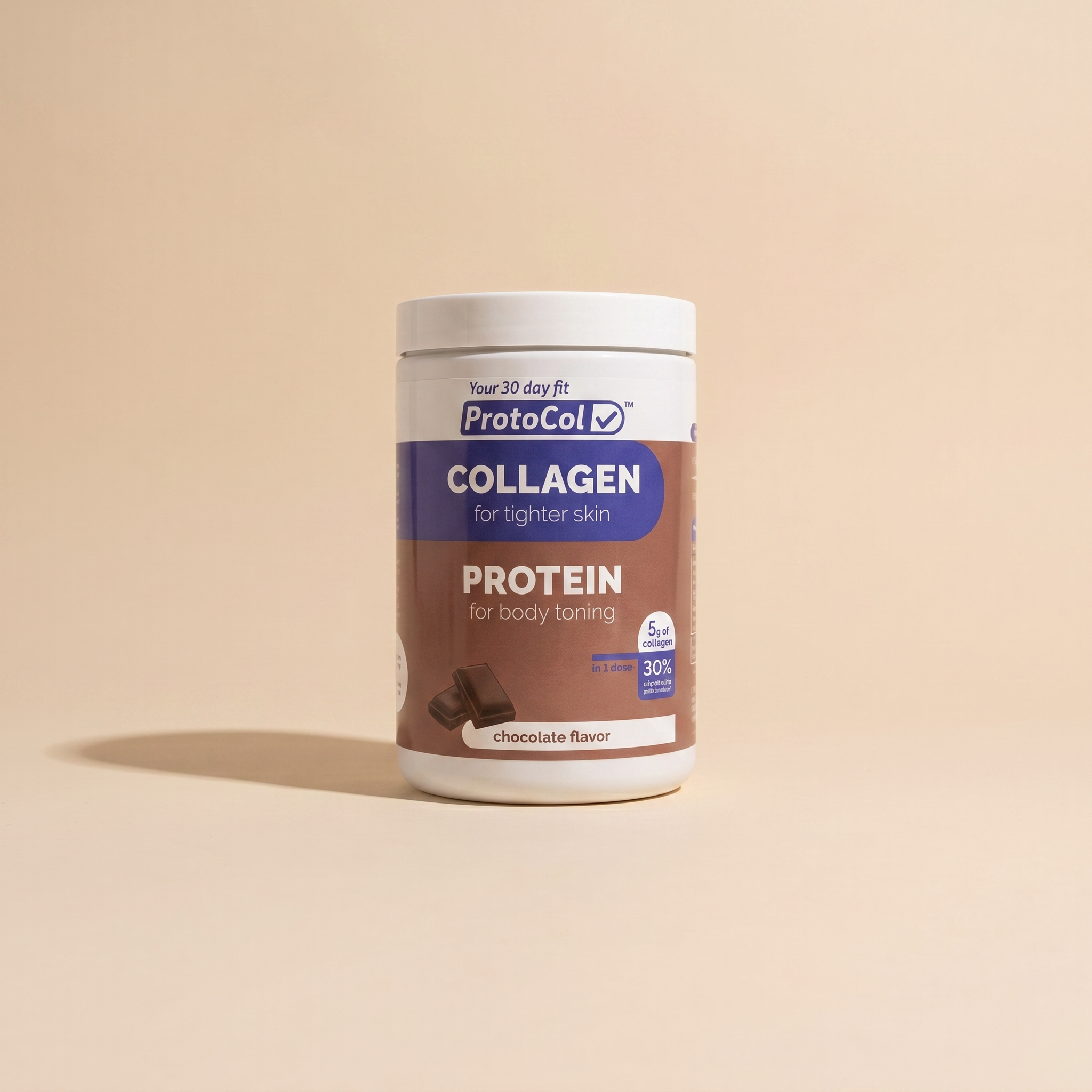
Il barattolo marrone fornisce 5 g di collagene bovino idrolizzato di Tipo II (Fortigel) per misurino, insieme a 6 g di proteine del siero del latte, per un totale di 11 g di proteine totali. Grammi, non milligrammi. Vale la pena essere precisi su questo, perché il settore degli integratori non lo è: gran parte del marketing del collagene cita i milligrammi in grassetto proprio perché il numero sembra più grande.
Vitamina C, il cofattore
Esiste un nutriente senza il quale il corpo non può fisicamente assemblare le fibre di collagene. La vitamina C è richiesta dagli enzimi che stabilizzano la tripla elica del collagene, motivo per cui una carenza produce tessuto connettivo fragile e deteriorato.
Puoi assumere collagene a volontà. Senza vitamina C, la sintesi si ferma. Il barattolo marrone contiene 40 mg di vitamina C per dose, il 50% dell'assunzione di riferimento, nello stesso misurino anziché come pillola separata che dimenticheresti.
Proteine del siero del latte, la struttura muscolare
Il collagene ricostruisce il legamento. Le proteine mantengono il muscolo che condivide il carico con esso.
Muscoli deboli intorno al bacino significano che l'intero carico ricade su un'articolazione già irritata. I 6 g di proteine del siero del latte in ogni misurino nutrono i muscoli che sostengono il bacino, in modo che l'articolazione non sia lasciata a fare il lavoro da sola. Questo è il motivo per cui la formula è collagene e proteine anziché solo collagene.
Il protocollo in pratica
Come assumerlo
Un misurino, al mattino, mescolato in un bicchiere d'acqua. È al gusto di cioccolato, senza zucchero e senza glutine, e si dissolve in circa 15 secondi. Non mescolarlo con liquidi bollenti.
Assumilo ogni giorno. Il tessuto connettivo si ricostruisce secondo i suoi tempi, e le donne che vedono un risultato sono quelle che lo hanno assunto per mesi anziché per giorni.
Settimana dopo settimana
- Settimane 1-2: Pochi cambiamenti evidenti. Alcune persone notano prima i capelli e le unghie, il che è normale, poiché questi si rinnovano più velocemente.
- Settimane 3-4: Uscire dall'auto e dal letto diventa più facile. La fitta acuta quando ci si gira di notte inizia ad attenuarsi.
- Settimane 8-12: Il dolore unilaterale si attenua. Le scale non vengono più fatte un gradino alla volta. Questo è il periodo in cui la maggior parte delle persone afferma che la situazione è finalmente cambiata.
Cosa dicono le donne che l'hanno provato
Mi è stato detto che era sciatica per due anni. Il dolore non è mai andato oltre il ginocchio, nemmeno una volta. Ho iniziato la polvere a ottobre e entro la sesta settimana riuscivo a uscire dall'auto senza appoggiarmi alla portiera.
Girarsi nel letto era la parte peggiore. Quella fitta acuta che ti sveglia. È la cosa che è svanita per prima, intorno alla quarta settimana.
Tre cicli di fisioterapia, e ha aiutato mentre la facevo ed è tornato dopo. Nessuno ha mai menzionato il legamento.
Le scale. Le facevo un gradino alla volta e fingevo di non avere fretta. Ora le salgo e basta.
Nota cosa nessuna di loro descrive. Nessuna parla di un cambiamento da un giorno all'altro. Ognuna parla di settimane. Questa è la differenza tra la ricostruzione del tessuto e il silenziamento di un segnale.
Domande frequenti
Quanto tempo prima di sentire una differenza? La maggior parte delle persone nota i primi cambiamenti tra la 3a e la 4a settimana, di solito uscendo dal letto e dall'auto più facilmente. Il tessuto connettivo si rinnova lentamente, quindi il cambiamento più profondo tende ad arrivare tra la 8a e la 12a settimana. La costanza è più importante della dose.
È sicuro insieme agli altri miei farmaci? Collagene e proteine del siero del latte sono generalmente ben tollerati. Se hai una condizione cronica o assumi farmaci su prescrizione, parla con il tuo medico prima di iniziare. Questo è un integratore alimentare, non un medicinale.
Posso assumerlo con caffè o tè? Sì, ma non con liquidi bollenti. Il calore superiore a circa 60 gradi può denaturare le proteine. Lascia raffreddare prima una bevanda calda, o usa semplicemente acqua.
Perché le capsule di collagene da farmacia non danno lo stesso effetto? Dosaggio. Una capsula tipica fornisce da 500 a 2.000 mg di collagene al giorno. La ricerca sul tessuto connettivo lavora in grammi. Un misurino del barattolo marrone fornisce 5 g di collagene idrolizzato di Tipo II più 6 g di proteine del siero del latte. Molte formule più economiche omettono anche la vitamina C, senza la quale il nuovo collagene non può essere formato affatto.
Esiste una versione vegana? No. Il collagene è per definizione una proteina animale, e il collagene qui è bovino. Non esiste una fonte vegetale di vero collagene. I prodotti vegetali commercializzati come collagene vegano sono "booster" di collagene, ovvero vitamine e aminoacidi, non il collagene stesso.
Cosa succede se ho già un'ernia del disco diagnosticata? Un'ernia e una disfunzione sacroiliaca possono coesistere, e spesso lo fanno. Sostenere il tessuto connettivo non cura un'ernia. Se hai un'ernia confermata con coinvolgimento nervoso, segui il piano del tuo specialista e considera questo come un supporto, non come un sostituto.
Come funziona la garanzia di 30 giorni? Assumilo per 30 giorni come indicato. Se non senti alcuna differenza, contattaci e riceverai i tuoi soldi indietro.
Quando il dolore è un segnale di qualcosa di serio
La maggior parte del dolore lombare in questa fascia d'età è meccanico. Alcuni non lo sono, e la differenza è importante.
Questi possono indicare compressione nervosa, infezione, frattura o altre condizioni che necessitano di una diagnosi piuttosto che di un integratore. Escludi prima le cause gravi. Per tutto il resto, per il dolore unilaterale che si ferma prima del ginocchio, il materiale di cui è fatto il legamento è il passo logico successivo.
Cosa fare ora
Per riassumere: se il dolore si ferma prima del ginocchio, peggiora quando ti giri nel letto e quando esci dall'auto, e le scansioni sono risultate pulite, la spiegazione più probabile non è la sciatica e non è semplicemente la tua età. È un'articolazione sacroiliaca i cui legamenti hanno perso collagene.
I legamenti sono collagene. Il collagene ha bisogno di vitamina C per essere costruito, e il muscolo intorno all'articolazione ha bisogno di proteine per condividere il carico. Questa è l'intera logica, ed è per questo che la formula contiene queste tre cose e non un elenco più lungo.
ProtoCol Collagen and Protein fornisce 11 g di proteine totali per misurino, 6 g di proteine del siero del latte più 5 g di collagene idrolizzato di Tipo II, con 40 mg di vitamina C. Un misurino ogni mattina, in acqua. Con una garanzia di rimborso di 30 giorni, quindi l'unica cosa che rischi è il tempo necessario per scoprirlo.


